
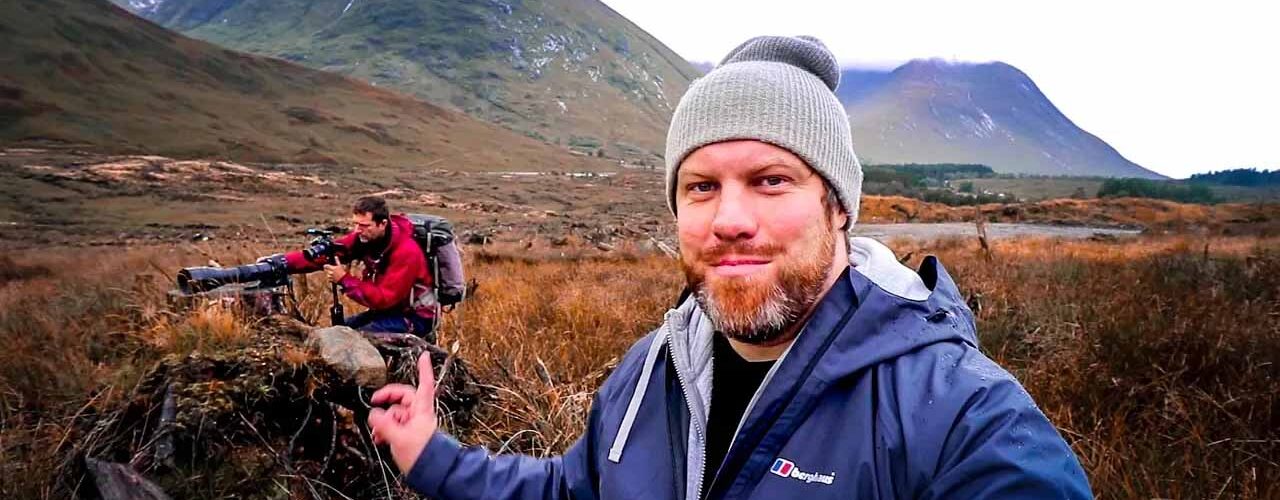
As a landscape photographer, there is something deeply familiar about wildlife photography. It still begins with light, atmosphere and place. But instead of waiting for clouds to move, you are waiting for something living to step into the frame.
That is what makes it so compelling.
Wildlife photography carries the same excitement as a dramatic sunrise, yet it unfolds in a quieter, more patient way. You might spend hours scanning a glen, walking slowly through reeds, or crouching low in wet grass. The challenge is not only technical. It is about positioning yourself without disturbing the animal. It is about respect.
Getting in front of wildlife without altering its behaviour is a skill in itself. The goal is rarely the animal staring straight at the lens. It is often more powerful to capture it unaware, moving naturally within its landscape. That subtlety tells a deeper story.
There is a calm intensity to it. The moment a stag appears in the mist or a group of deer move through rain, everything sharpens. You react quickly, but you do so quietly. Long lenses replace wide ones. Focus shifts to the eye. Composition must adapt to movement. Weather becomes part of the narrative. Rain, wind and low light often add mood rather than inconvenience.
For a landscape photographer, wildlife adds a new layer to familiar ground. The mountains remain. The light still matters. But now there is life moving through the scene. It transforms a beautiful place into something dynamic and unpredictable.
It is fun. It is challenging. It demands patience. And when it comes together, it feels less like taking a photograph and more like being briefly accepted into the landscape itself.
Wildlife photography is not just about animals. It is about presence, restraint and timing. And once you experience that quiet connection in the field, it becomes very difficult to resist going back for more.
Add comment